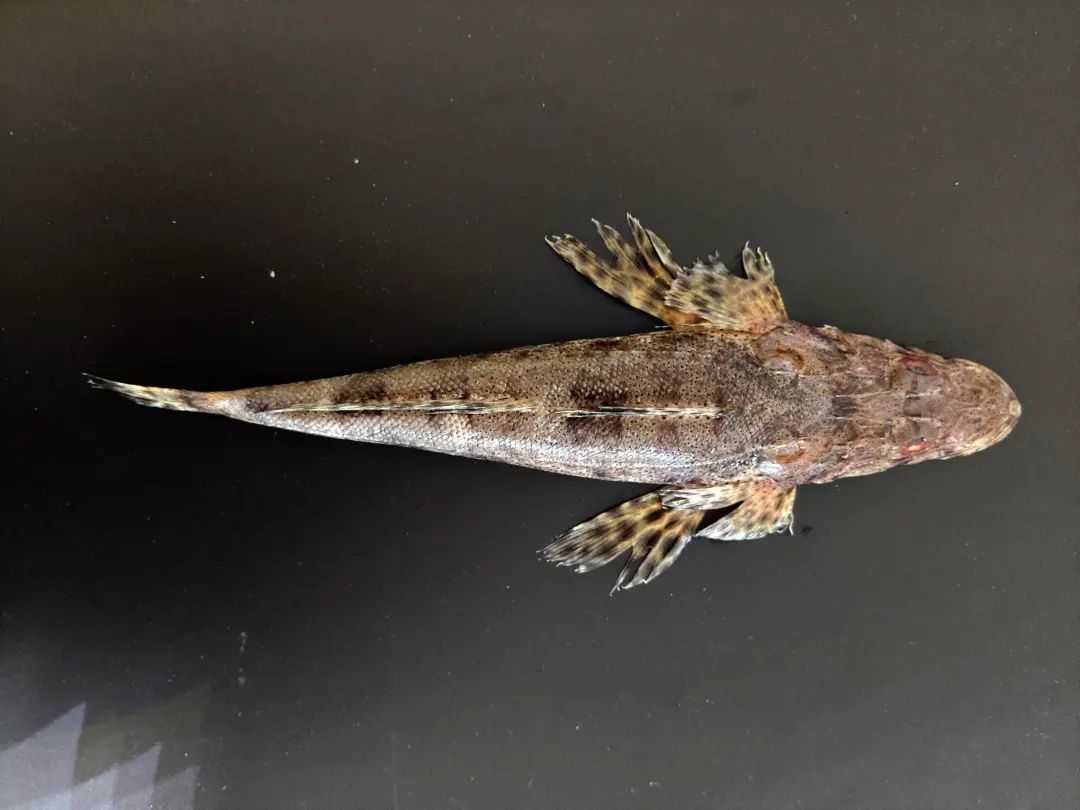
Platycephalus indicus: The Formidable Flathead of Coastal Waters


Marine Biology
Platycephalus indicus: The Formidable Flathead of Coastal Waters

Platycephalus indicus, commonly known as the Indian flathead or by various regional names such as "ox-tail fish" and "braid fish" in northern regions, is a remarkable fish species inhabiting the coastal waters of the Indo-Pacific. Renowned for its unique appearance and a formidable defense mechanism, this fish has earned its place as both a fascinating marine subject and a prized catch for fishermen.


The Indian flathead showcases a robust, elongated body that can grow up to 60 centimeters in length. Its most distinctive feature is the flattened head, broad and angular, equipped with a pair of large, upward-facing eyes that provide excellent vision for spotting prey from below. The body is covered in rough, mottled scales that blend seamlessly with sandy or muddy seabeds, ranging in color from brown to olive with darker patches. But its most fearsome trait lies in the sharp, venomous spine on its dorsal fin. This spine, which can pierce through gloves and skin, serves as a potent defense against predators and accidental encounters with humans, delivering a painful sting.


In its natural habitat, Platycephalus indicus is a bottom-dwelling predator. It lies motionless on the seabed, partially buried in sand or mud, using its camouflage to ambush unsuspecting prey. Its diet mainly consists of small fish, crustaceans, and cephalopods. When potential prey swims overhead, the flathead strikes with lightning speed, opening its wide mouth to engulf the victim. This ambush hunting strategy, combined with its excellent camouflage, makes it a highly efficient predator in shallow coastal waters, estuaries, and bays.


Despite its adaptability, the Indian flathead faces threats from overfishing, as it is highly sought after for its firm, white flesh in seafood markets. Additionally, habitat degradation due to coastal development, pollution, and trawling activities damages the seabed environments it depends on. Conservation measures, including fishing regulations and the protection of critical habitats, are essential to ensure the long-term survival of this unique species. As a vital part of the marine food web, Platycephalus indicus plays a crucial role in maintaining the balance of coastal ecosystems, highlighting the importance of preserving its habitats.

Latest Stories
Beauty News1 minute readVienna-based amateur model Lina Weiss, 30, stars in Issue 176 with a series of posed photos that blend everyday life with subtle styling. Shot by photographer Leo Braun, the collection captures Weiss in her favorite local spots—from her backyard garden to a historic bakery and her apartment’s kitchen—each pose carefully arranged to feel natural, not forced.
Industry News1 minute readThe Office of the United States Trade Representative (USTR) announced the initiation of a Section 301 investigation into Brazil. The probe will examine whether Brazil’s policies and practices in areas such as digital trade, electronic payment services, "unfair" preferential tariffs, intellectual property protection, ethanol market access, and deforestation-related measures negatively impact U.S. trade interests.
Sports News2 minute readThe LA28 Organising Committee has formally published the detailed full schedule for the 2028 Summer Paralympics. The Games will cover 23 sports and 560 medal events, with competition running for more than 1,100 hours in total. Two sporting disciplines will kick off preliminary matches ahead of the Opening Ceremony, marking a historic scheduling arrangement for the Paralympic Movement.
Travel News2 minute readPerched at the meeting point of the Rhône and Saône rivers in Lyon, France, the Musée des Confluences stands as a beacon of innovative design and interdisciplinary storytelling. Crafted by Austrian architects COOP HIMMELB(L)AU and inaugurated in December 2014, this landmark institution has reshaped Lyon’s cultural landscape, merging avant-garde architecture with profound explorations of humanity’s place in nature and history.
Sports News1 minute readWorld Aquatics has informed TASS that Russian and Belarusian athletes competing under a neutral status are prohibited from linking their participation in events to their respective countries. This ban extends to social media, where posting flag emojis is not allowed, the organization announced this week.
Industry News1 minute readNetflix has revealed that it employed generative AI tools to create a building collapse sequence in the Argentine sci-fi series "The Eternals," which premiered on April 30, 2025. This marks the first time the streaming giant has used a generative AI-generated final shot in its original content, according to co-CEO Ted Sarandos.
Social News1 minute readSyria, a land steeped in ancient history, is the birthplace of Babylonian civilization, Mesopotamian culture, the Assyrian Empire, and the Phoenician Kingdom. Yet today, much of it lies in ruins, a casualty of prolonged conflict.